Delivery included within the Philippines.

Sterling Silver in Tropical Climates
Sterling silver responds to humidity, air, and daily wear. Tarnish is a material reaction — influenced by environment and managed through controlled surface finishing.
2/17/20261 min read
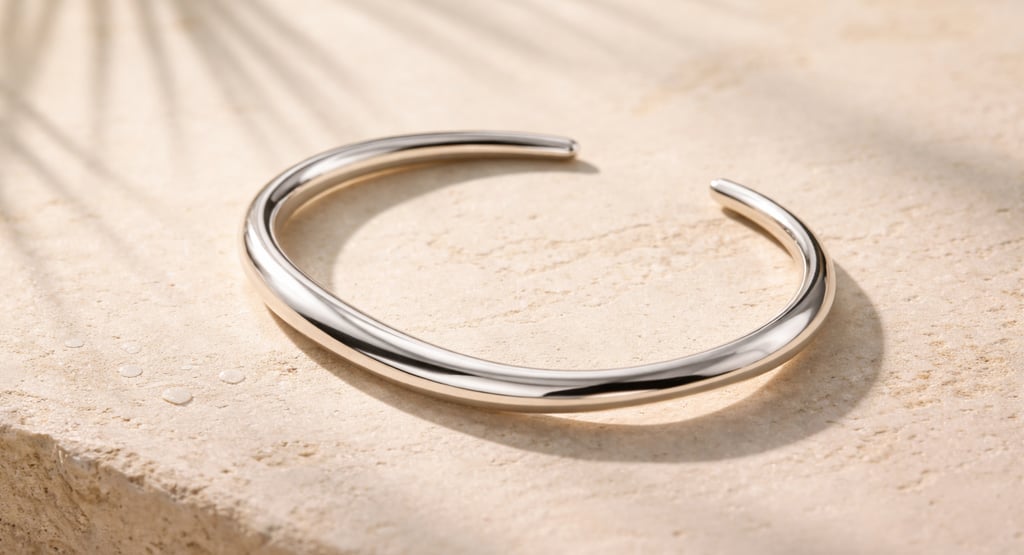
Sterling Silver in Tropical Climates
Sterling silver is defined by its clarity, structure, and refined tone.
In tropical climates, where humidity and temperature remain consistently elevated, that clarity is not easily preserved.
Surface change occurs more quickly.
Environmental exposure becomes continuous.
This is not a defect.
It is a material response.
How Humidity Affects Silver
Silver interacts with elements present in the air.
In humid environments, moisture carries compounds that accelerate surface reactions.
Skin chemistry, perspiration, and daily exposure further influence this process.
Over time, a thin surface layer forms.
This gradually reduces brightness.
The rate of change is not random.
It is determined by environment, frequency of wear, and surface protection.
Material Behavior Under Daily Conditions
Jewelry worn in tropical climates is subject to constant variation:
• humidity throughout the day
• temperature shifts between indoor and outdoor environments
• repeated contact with skin, fabric, and air
Under these conditions, materials that rely solely on surface appearance degrade more quickly.
Sterling silver behaves differently.
It maintains structural integrity, while allowing the surface to be restored through controlled care.
The Role of Surface Structure
Performance in tropical conditions is defined at the surface.
Sterling silver is often finished with protective layers designed to stabilize this interaction.
At Elyzzea, finishing is approached as structure.
Silver reinforcement.
Palladium barrier.
Rhodium finish.
Each layer serves a defined function:
• reinforcing the surface
• reducing direct exposure
• slowing oxidation
This structure does not prevent change entirely.
It controls how the surface responds.
Maintaining Clarity Over Time
In humid environments, consistency depends on routine.
Recommended care:
• store jewelry in a dry, enclosed space
• avoid direct contact with perfumes and chemical products
• remove pieces before prolonged exposure to water
• wipe surfaces after wear to remove residue
• polish periodically with a soft, non-abrasive cloth
These practices reduce surface buildup and maintain clarity between cleanings.
Designed for Tropical Wear
Jewelry is defined by how it performs in real conditions.
In tropical climates, this means continuous exposure — not occasional use.
Sterling silver supports this through:
• structural stability
• a surface that can be renewed
• compatibility with daily wear
With proper structure and care, it remains consistent.
Not unchanged.
But controlled.